An in-conversation event with We Contain Multitudes artist Jo Longhurst and DCA’s new Head of Exhibitions Dan Brown at the University of Dundee.
They will discuss Longhurst’s contribution to the exhibition within the context of her wider practice, with a particular focus on disability, lived experience, and the politics of how bodies—especially disabled and marginalised bodies—have been framed, controlled, and reclaimed.
Jo Longhurst's multidisciplinary practice interrogates the politics of looking and being seen, gently probing how cultural ideas of Perfection shape personal and national identities.
Longhurst’s work explores the entangled relationships between human, animal, and ecological worlds. Her current project, Crip, centres on the resilient bindweed—an often-unwelcome wildflower—as a critical metaphor for examining cultural attitudes toward disability, care, and empathy, and for imagining more inclusive, sustainable, and equitable ways of living.
Duncan of Jordanstone College of Art and Design, University of Dundee
Wednesday 4 February, 12.30-1.30
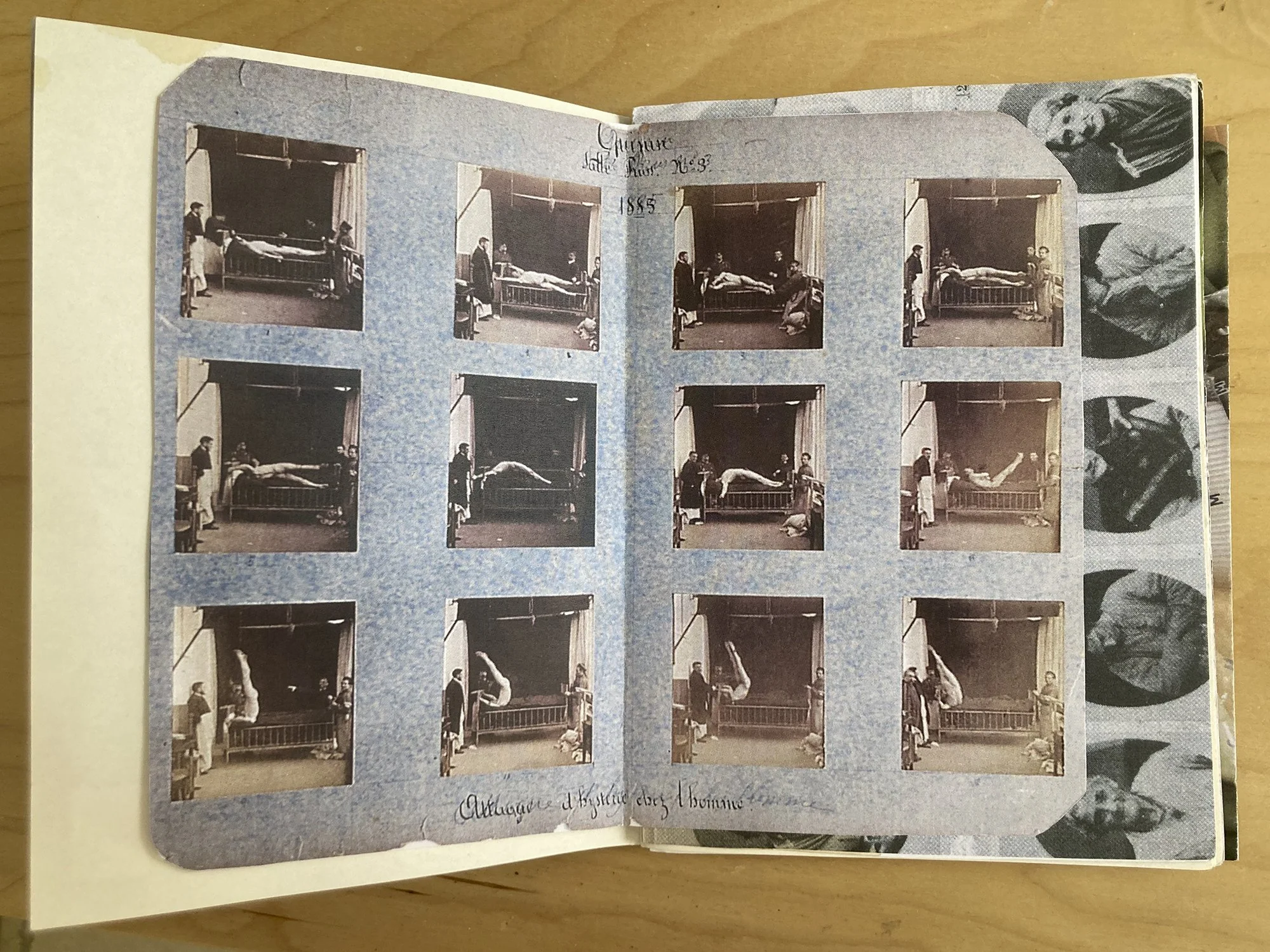
ID1: an open workbook showing a photocopy of an 1885 sepia contact sheet. The grid of 12 square photographic images show a naked patient lying on a metal frame bed, arching and folding his body into various positions, not unsimilar to gymnastic warm up movements. Tucked behind this image, just seen, is another photocopy - a grid of 19c black and white portraits of female patients, each posed within an oval frame.
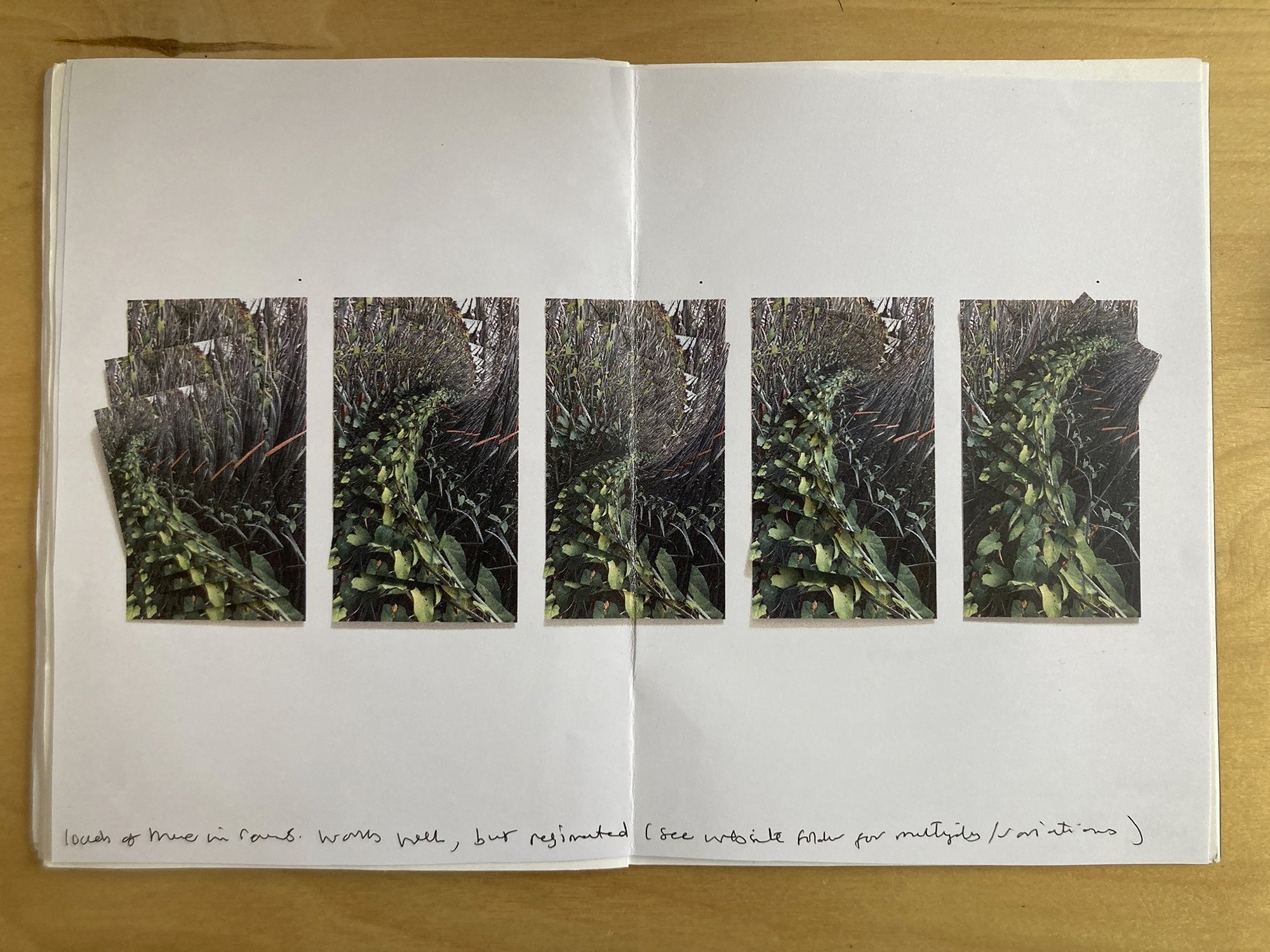
ID2: an open workbook showing a laserjet print of 5 bindweed collages, lined up in a row. Each collage is different, but made up of multiple prints of the same image, which give the impression of a plant tendril growing in a twining fashion toward the light. The edges of the prints curl slightly, leaving shadows in the collage that suggest movement and a sense of three dimensionality. The curving shapes of the collaged plants echo the body shape of the man in the previous image.
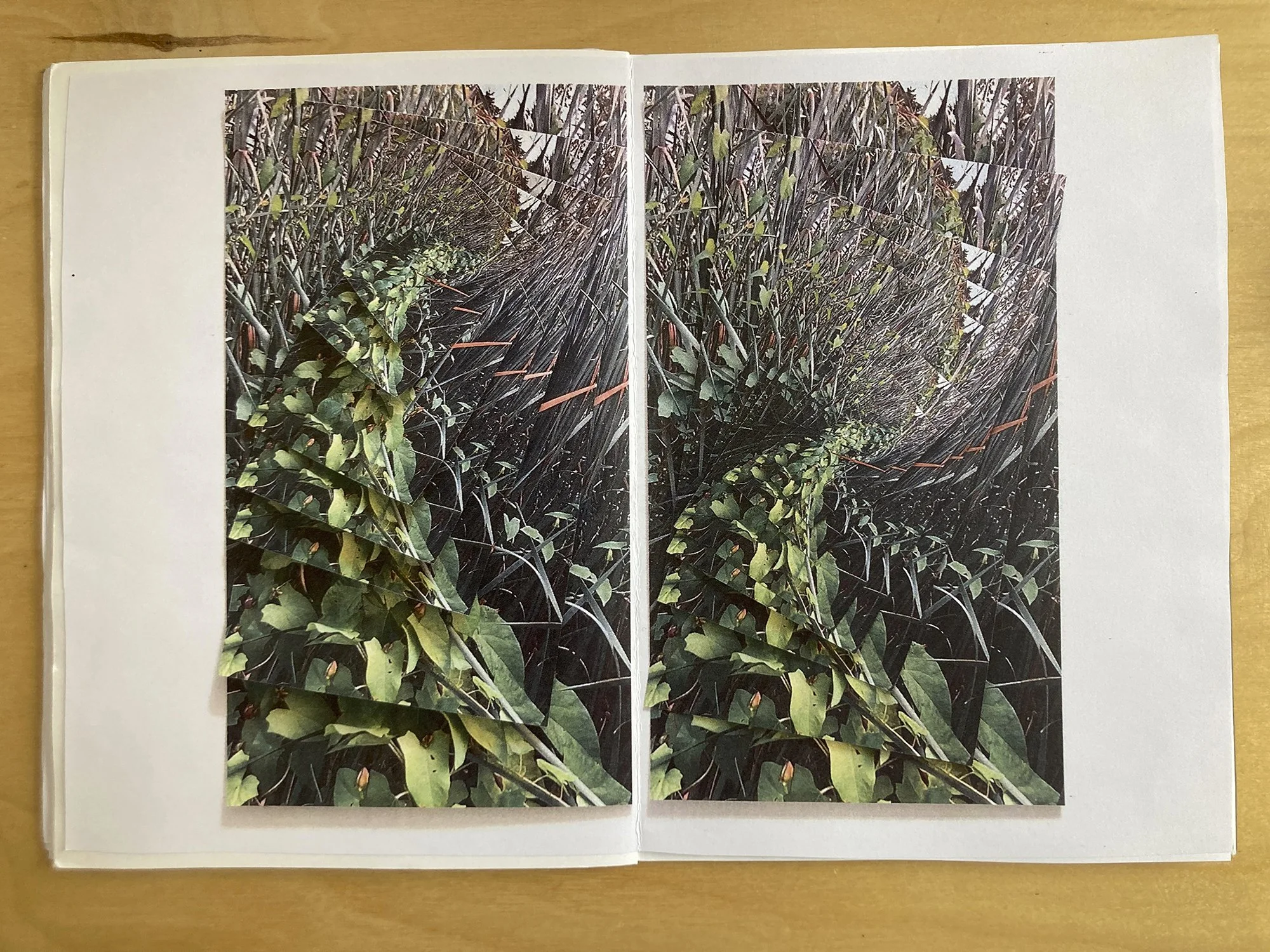
ID3: an open workbook showing a laserjet print of 2 further bindweed collages side by side. The images are larger than the previous ones and more detail of the form and foliage depicted in the collage can be seen. The bindweed leaves are pale green and yellow, the vines and buds have a reddish hue. The bindweed is growing amongst other weeds up some tall grey reeds, which add to the twisting repetitive pattern in the collages.